
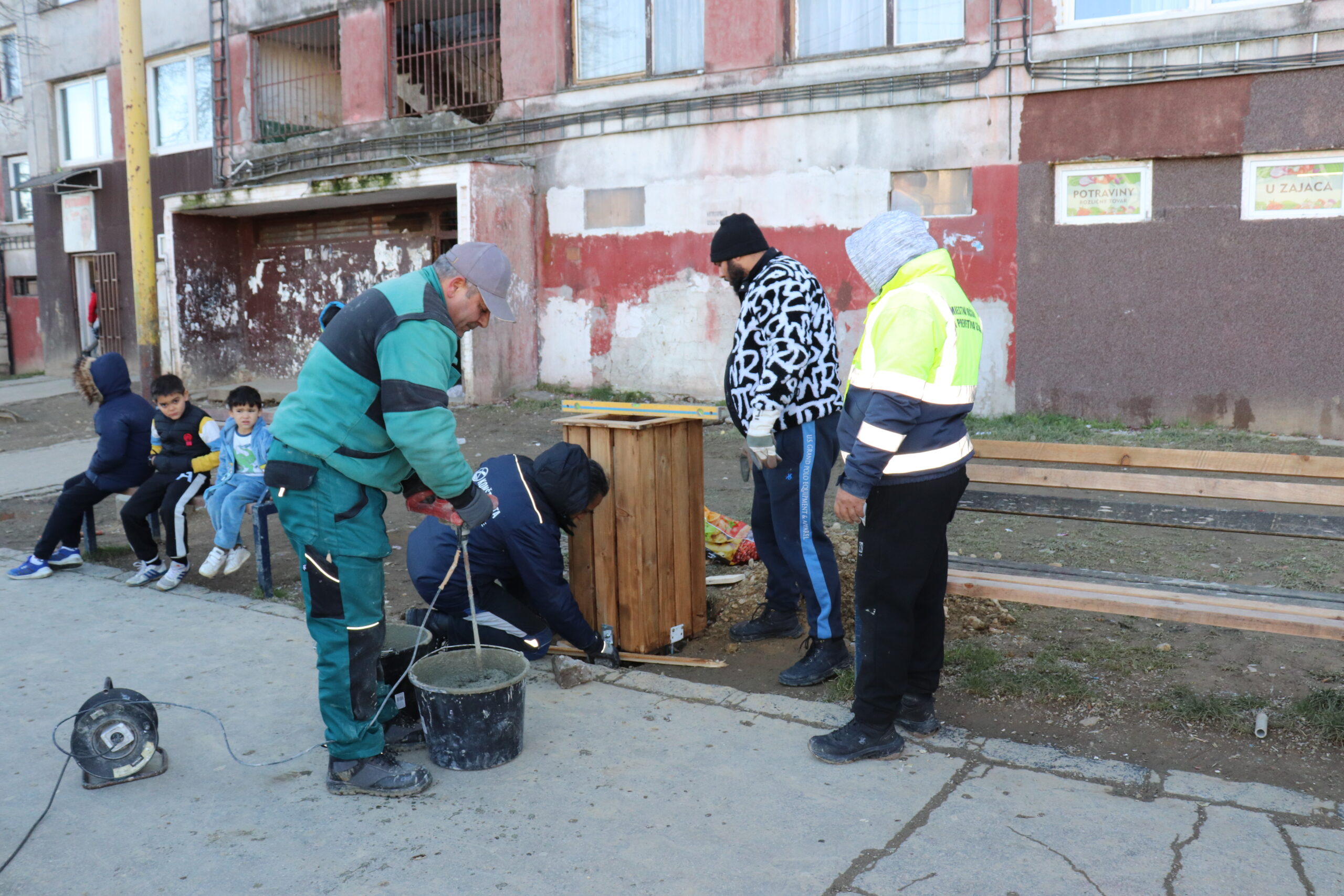
RESDI is pleased to announce the successful implementation of GRIP 2024 – Green Roma Inclusion Program, supported by the European Climate Foundation (ECF). The project ran throughout 2024 and laid critical groundwork for promoting the active participation of marginalized Roma communities in the European Union’s green transition.
About the GRIP 2024 Project
GRIP was designed to respond to the environmental and socio-economic challenges facing Roma communities in Slovakia. These communities continue to experience some of the highest rates of energy poverty and environmental exclusion in Europe, with limited opportunities to engage in sustainability efforts or influence public policy.
Through a combination of research, policy support, and field-level innovation, GRIP 2024 sought to change this reality by creating tangible pathways for inclusion, empowerment, and long-term sustainability.
Key Areas of Focus
Participatory Planning for Sustainable Development
In partnership with the City Ward of Luník IX in Košice, GRIP facilitated the development of a comprehensive Local Strategy for Sustainable Development. This participatory process integrated energy, environmental, and social dimensions—offering a model for inclusive urban planning in marginalized areas.
Innovative Energy Solutions and Pilot Audits
In Velký Krtíš, the project conducted an energy audit for social housing, enabling local residents to apply for national energy efficiency programs. The audit also provided a replicable example for other municipalities facing similar infrastructure and energy challenges.
Social Enterprise Development
At Luník IX, RESDI developed a full business and feasibility plan for a community energy social enterprise. The plan explored circular economy models such as briquette production from local biomass, with potential for energy cost savings and job creation for long-term unemployed residents.
Advancing Environmental Justice through Policy and Advocacy
GRIP 2024 initiated a concept for an Aarhus Centre for Roma Communities in Central Europe, aiming to serve as a regional platform for knowledge sharing, capacity-building, and policy influence. This included groundwork for advocacy at national and EU levels.
Coalition Building
The project organized two roundtable meetings with public and private sector actors to present outcomes and promote inclusive, evidence-based policymaking. These forums highlighted the need for targeted investment in sustainability in Roma-majority localities.
Long-Term Vision
GRIP 2024 was not just a standalone effort—it laid the foundations for a long-term, scalable approach to Roma inclusion in environmental and climate strategies. The project’s results have already influenced follow-up initiatives, including the 2025 GRIP expansion, with continued support from the European Climate Foundation.
By combining participatory methods, local innovation, and strategic partnerships, RESDI continues to work toward a just green transition that benefits all communities—especially those historically left behind.